Marine audio installation on a boat is not the same job as upgrading a car stereo. Saltwater spray, direct sun, constant vibration, and humidity change what equipment survives and how it needs to be mounted, sealed, and wired. Before you buy speakers, a subwoofer, or an amplifier for your boat, it helps to understand what “marine-rated” actually means and what a professional installation should include.
For boat owners in Punta Gorda and along Charlotte Harbor, that means planning for a system that will spend its life in direct Florida sun and near saltwater, not just picking components because they fit the available space. The right components, sealed correctly and wired the right way, can last for years of regular use on the water.
Why Marine Audio Installation Is Different From a Car Stereo Upgrade
A car’s cabin protects electronics from rain, direct sun, and humidity. A boat does not offer the same protection, even on days when the water is calm. Speakers, amplifiers, and head units mounted in a helm, console, or tower are exposed to spray, condensation, and hours of UV exposure that would age standard car-audio components quickly.
Marine-rated equipment is built around that exposure. Speaker cones use UV-resistant materials so they do not crack or fade in the sun. Mounting hardware is typically stainless steel or coated to resist corrosion. Circuit boards on marine amplifiers and receivers are often coated or potted to resist moisture. None of that is cosmetic — it is what keeps a system working after a season of regular trips out of Charlotte Harbor.
The boat’s electrical system also behaves differently than a car’s. Marine 12-volt systems, battery banks, and charging setups vary by boat, and an installer needs to confirm the system can support new equipment before running wire. Skipping that step can leave a new system underperforming or tripping breakers on its first trip out.
Protecting Speakers, Amps, and Wiring From Saltwater and Sun
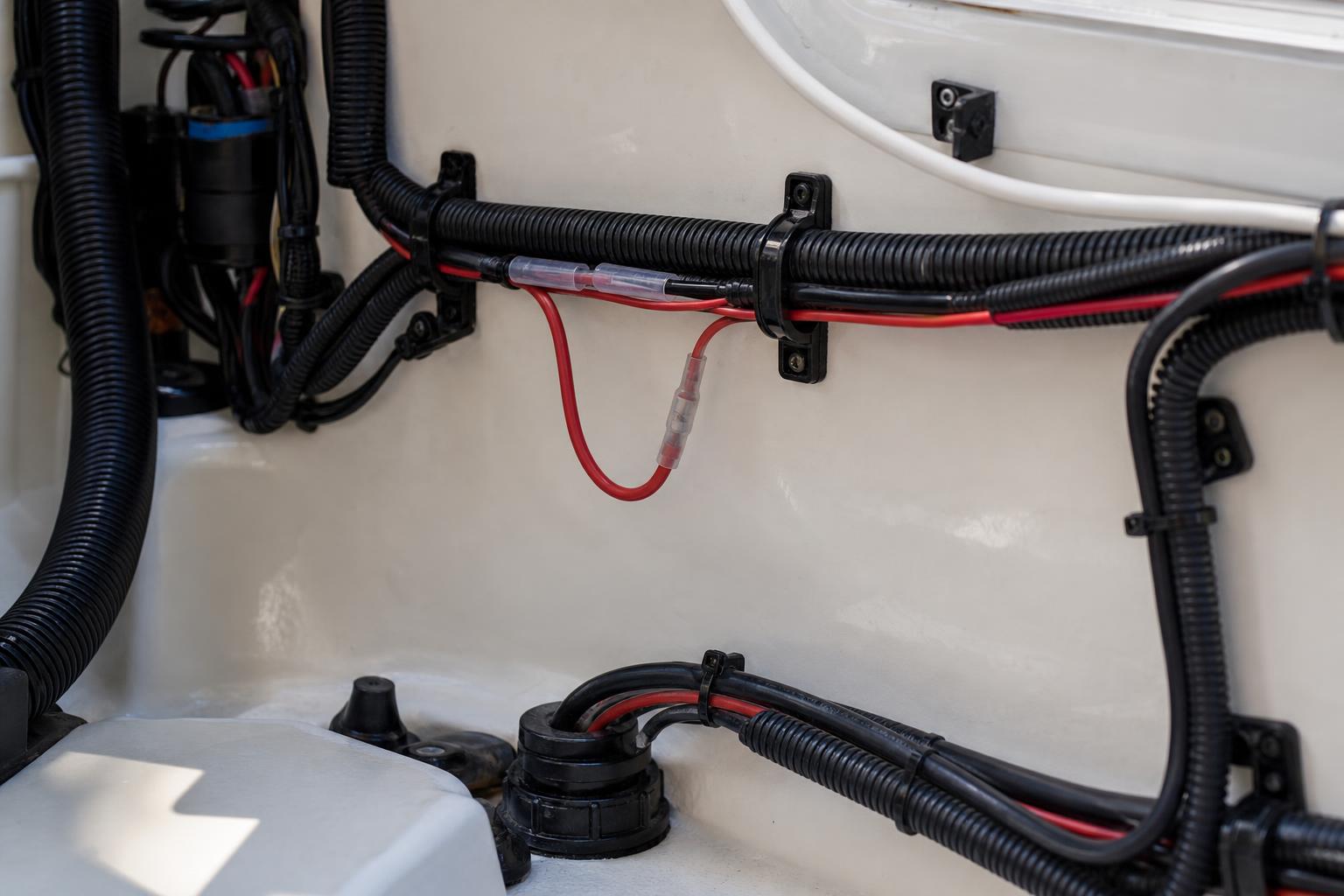
Corrosion is the biggest long-term threat to a marine audio system. Saltwater and humid air reach connections that would stay dry in a car, so tinned marine-grade wiring and corrosion-resistant connectors matter more than they would for an automotive install. A drip loop — a deliberate low point in the wire run — helps keep water from following the cable straight into a connector or amplifier.
For general boating safety guidance, the U.S. Coast Guard’s recreational boating safety program is a good place to start. Whatever equipment you choose, loose, corroded, or unsealed connections are not just a sound-quality problem — over time they are also a safety and reliability issue on the water.
Amplifiers should be mounted in a location that stays as dry as possible, away from bilge areas and low points where water can pool. Ventilation matters too, since Florida heat can push an amplifier’s internal temperature higher than it would run in a car, especially in an enclosed console.
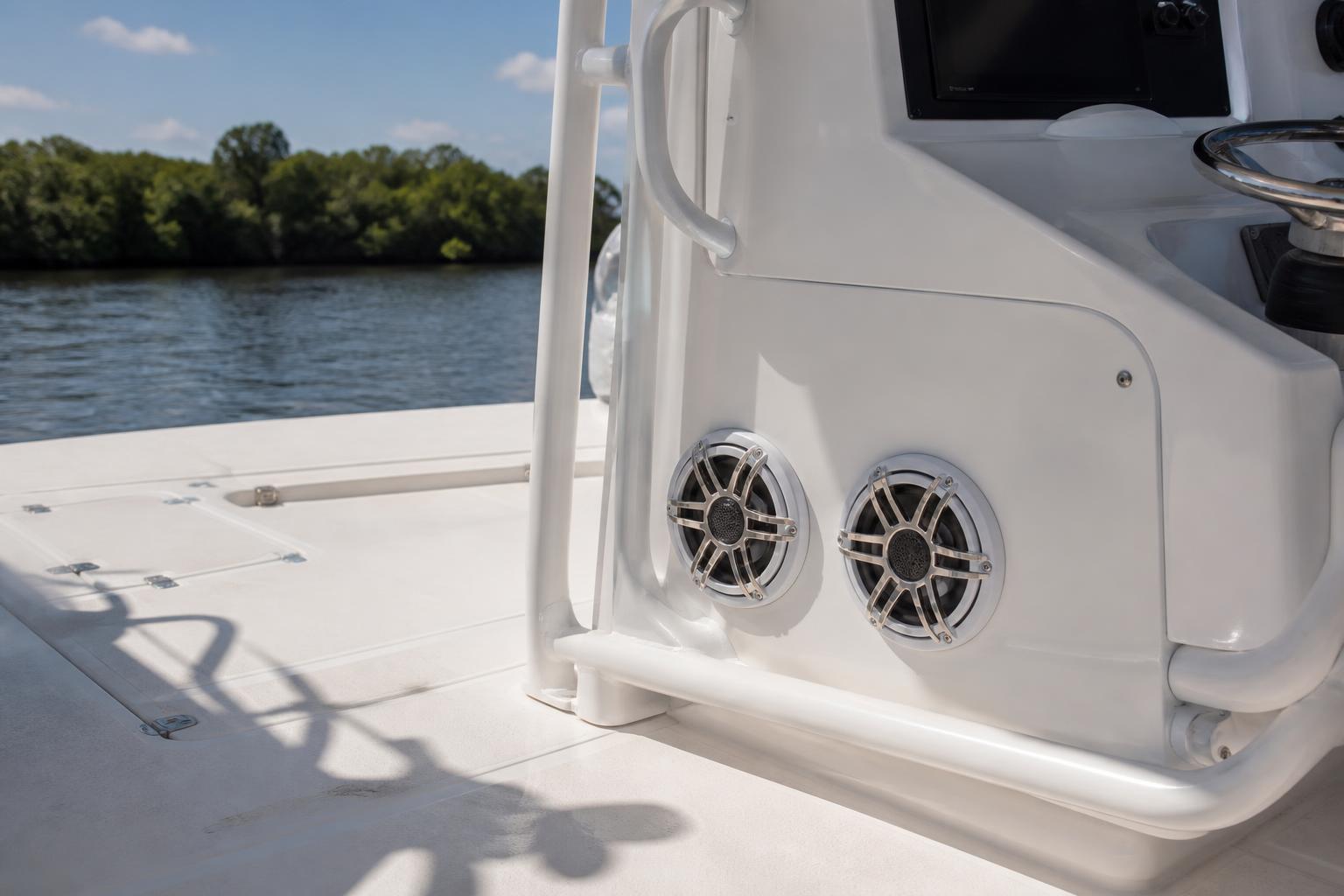
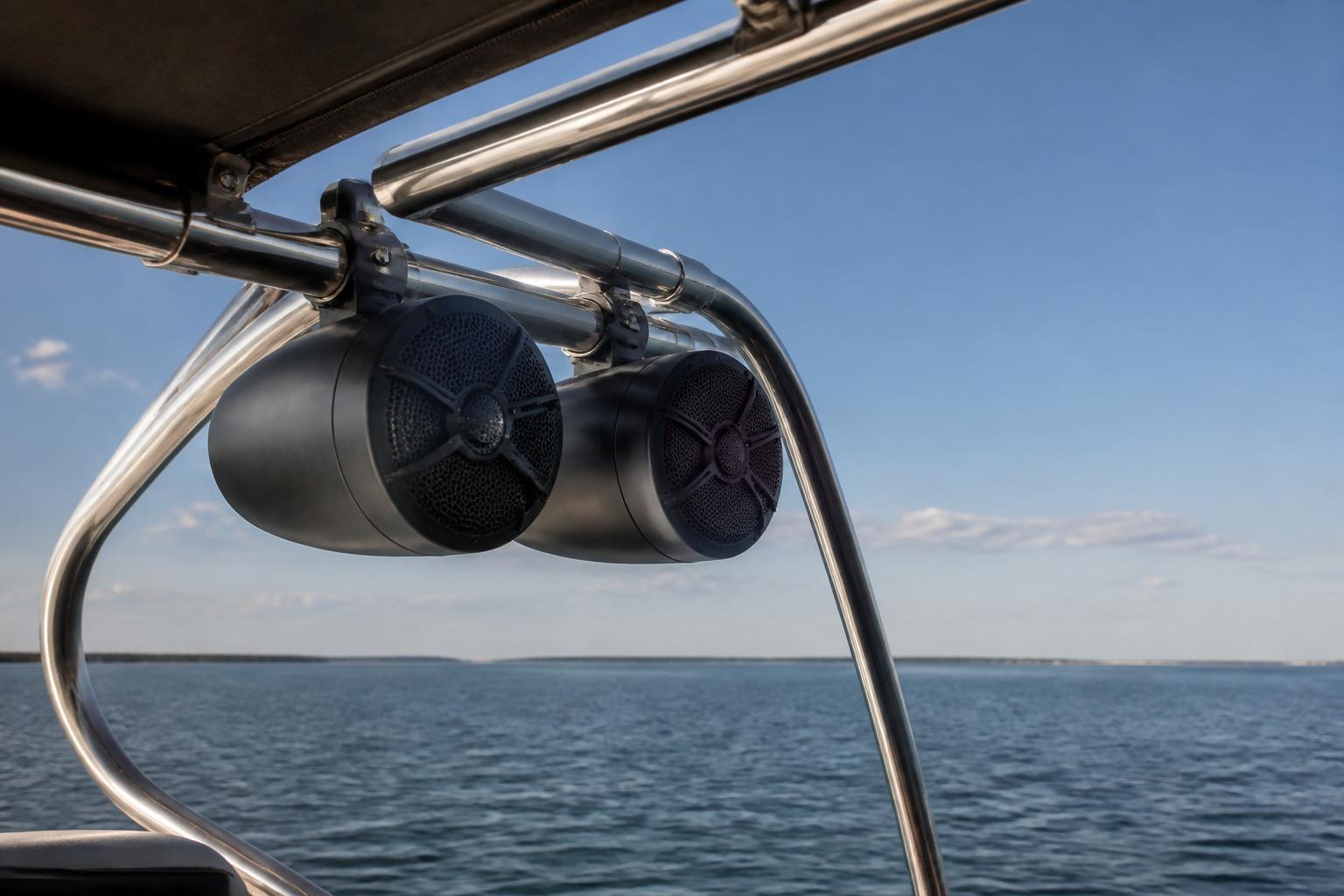
Speaker placement should also account for spray patterns specific to the boat, not just where a mounting hole happens to be easiest to cut. A tower speaker exposed to spray at speed will wear differently than one mounted higher and angled away from the waterline.
Choosing Marine-Rated Components for Your Boat
Not every “marine” label means the same level of protection. Look for speakers with UV-stabilized cones and rubber surrounds rather than foam, which breaks down faster in sun and salt air. Amplifiers and head units marketed for marine use often list a conformal coating on internal components, which resists corrosion from humidity even when the housing itself is sealed.
Power handling should match your boat’s electrical capacity, not just the biggest number on the box. An amplifier sized beyond what your battery and charging system can support will underperform and can shorten battery life. This is a common area where a professional installer’s assessment of your specific boat saves you from buying equipment that never reaches its potential.
Boat type matters too. A center console with an open helm has different placement options than a pontoon with a bimini top or a cruiser with an enclosed cabin. Tower speakers work well for open boats where sound needs to travel over wind and engine noise at speed; helm-mounted speakers may be a better fit for a boat used mostly at low speed or at anchor.
Planning Speaker and Amplifier Placement Before Installation
Placement decisions affect both sound quality and long-term durability. Speakers mounted too close to the waterline or directly in a spray path will show wear faster, regardless of how well they are rated. Subwoofer enclosures need a dry, secured location — usually inside a console or under a seat — where they will not shift or take on water during rough water or hard turns.
Wiring runs should avoid sharp edges, moving parts like steering cables, and areas that flex when the boat is underway. A planned wiring path, secured with marine-rated clips and grommets at any pass-through points, reduces the chance of chafing that can cause a short or an intermittent connection months after installation.
This is also the stage where it helps to decide on zones — for example, cockpit speakers for conversation-level listening at anchor versus tower speakers built for volume at cruising speed. Planning zones before mounting anything prevents having to redo wiring later.
What to Expect During a Professional Marine Audio Installation
A proper marine audio installation starts with an assessment of your boat’s current electrical system and existing wiring, followed by a conversation about how you actually use the boat — day trips, fishing, watersports, or entertaining at anchor. That conversation shapes equipment selection and placement more than any single spec sheet.
From there, a professional installation should include mounting components in the planned locations, running and securing marine-rated wiring with proper fusing, sealing any console or panel cut-outs, and testing the full system before handoff. A good installer will also walk you through the controls and any maintenance steps specific to your equipment.
If your boat also gets marine window film for glare and heat control, it is worth asking about boat window tinting at the same time — reducing cabin heat can help protect electronics mounted nearby from constant high temperatures, in addition to the comfort benefit. SunGuard serves boat owners in Punta Gorda and Port Charlotte for both marine audio and marine window tinting work. For a broader look at how marine-grade components fit into audio upgrades across Southwest Florida, see our guide to car audio upgrades, which includes a section on marine-grade audio.
Frequently Asked Questions About Marine Audio Installation
How long does marine audio installation take?
Timing depends on the scope of the project. Replacing speakers on existing wiring is usually a shorter visit than adding a full system with a new amplifier, subwoofer, and rewired electrical connections. Ask for a time estimate specific to your boat and the equipment you are adding.
Can I upgrade just the speakers without a new amplifier?
In many cases, yes, as long as your existing amplifier or head unit can support the new speakers’ power handling. An installer can check your current setup and tell you whether the existing electronics are a good match before you buy new speakers.
Will marine speakers work on a boat with no protective canvas or T-top?
Marine-rated speakers are built to handle direct sun and spray, so they can be installed on fully open boats. Placement still matters — angling speakers away from direct spray at speed extends their life even when they are rated for exposure.
What maintenance does a marine audio system need after installation?
Periodically rinsing salt residue from speaker grilles and checking that mounting hardware has not loosened from vibration are the most common upkeep steps. If you notice reduced volume, distortion, or a component that will not power on, have the wiring and connections checked before the issue affects other parts of the system.
For questions about marine audio installation, contact SunGuard Window Tinting in Punta Gorda at (941) 625-9666. We serve boat owners in Punta Gorda and Port Charlotte and can walk you through equipment options for your specific boat before you schedule an installation.