
Truck bed covers look simple when they are closed, but the way they open changes how a pickup works every day. A cover can help shield ordinary cargo from sun and weather and can discourage casual viewing, yet every design makes a tradeoff among bed access, security, storage space, weight, and price. Comparing truck bed cover types by real use is more helpful than choosing the one that looks toughest in a product photo.
Start with what goes in the bed
Write down the loads the truck carries most often. Groceries, luggage, tools, sports gear, and small boxes fit below the bed rails. Furniture, landscaping supplies, appliances, motorcycles, and tall equipment may need the entire opening. A cover that is convenient for low daily cargo can become frustrating if it blocks the front of the bed whenever a tall load appears.
Also note how frequently the bed must switch from covered to fully open. Some drivers rarely haul above the rails and value a clean closed surface. Others need quick access several times a week. The best accessory is the one the owner will actually open, secure, and maintain correctly, not necessarily the heaviest or most complicated model.
Soft rolling covers favor simple access
A soft rolling cover typically uses flexible material that rolls toward the cab. It can provide broad bed access without leaving rigid panels stacked above the rails. The rolled bundle still occupies some space at the front, and the material must be tensioned and latched as designed. This type can suit drivers who want a lightweight cover and often carry taller items.
Flexible material does not provide the same physical barrier as a rigid panel. A locked tailgate and a closed cover may keep cargo out of sight, but owners should not treat any soft surface as a safe. Inspect the fabric, stitching, latches, seals, and tension system over time. Heat, sun, debris, and repeated opening all make routine checks worthwhile in Southwest Florida.
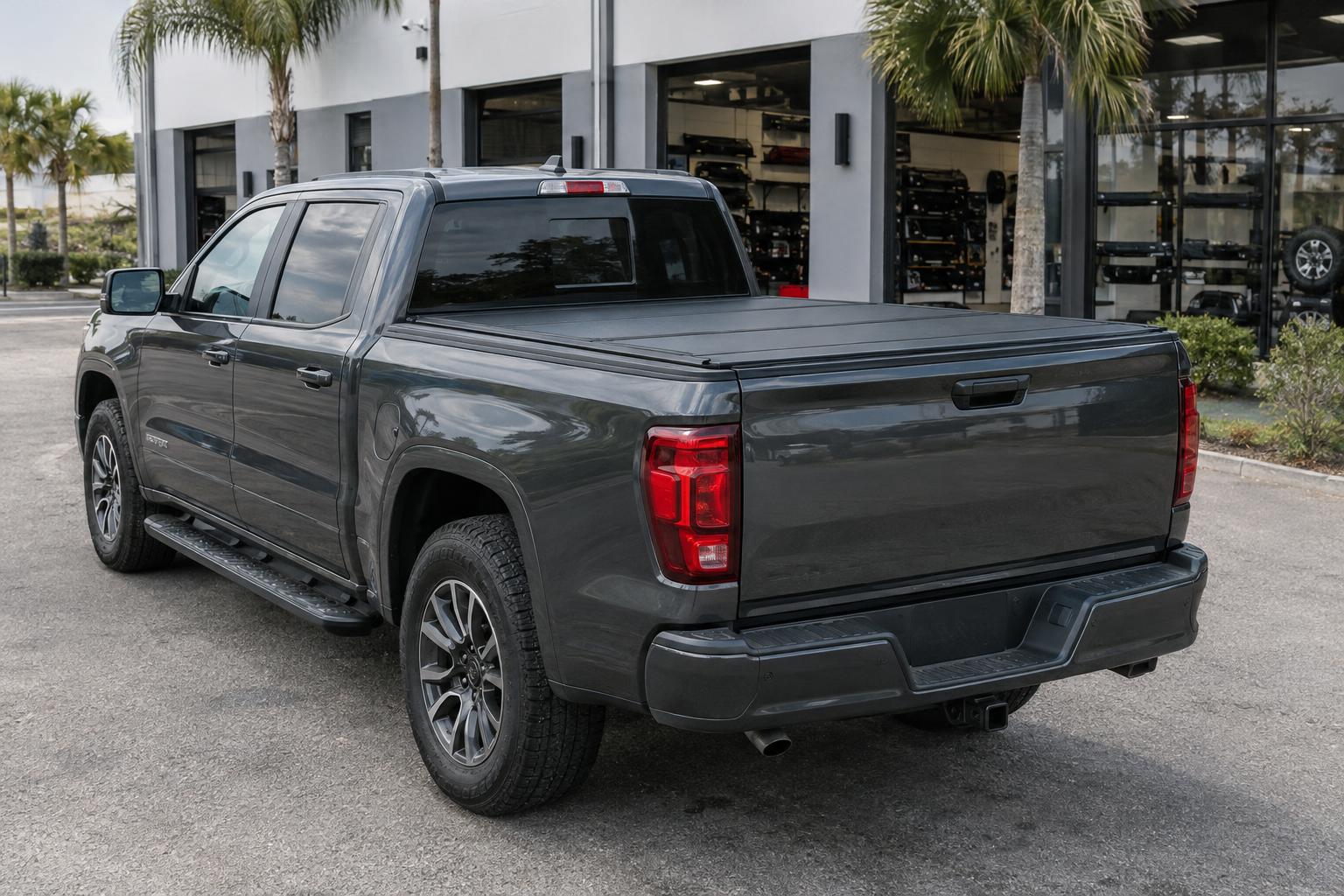
Hard folding covers balance access and structure
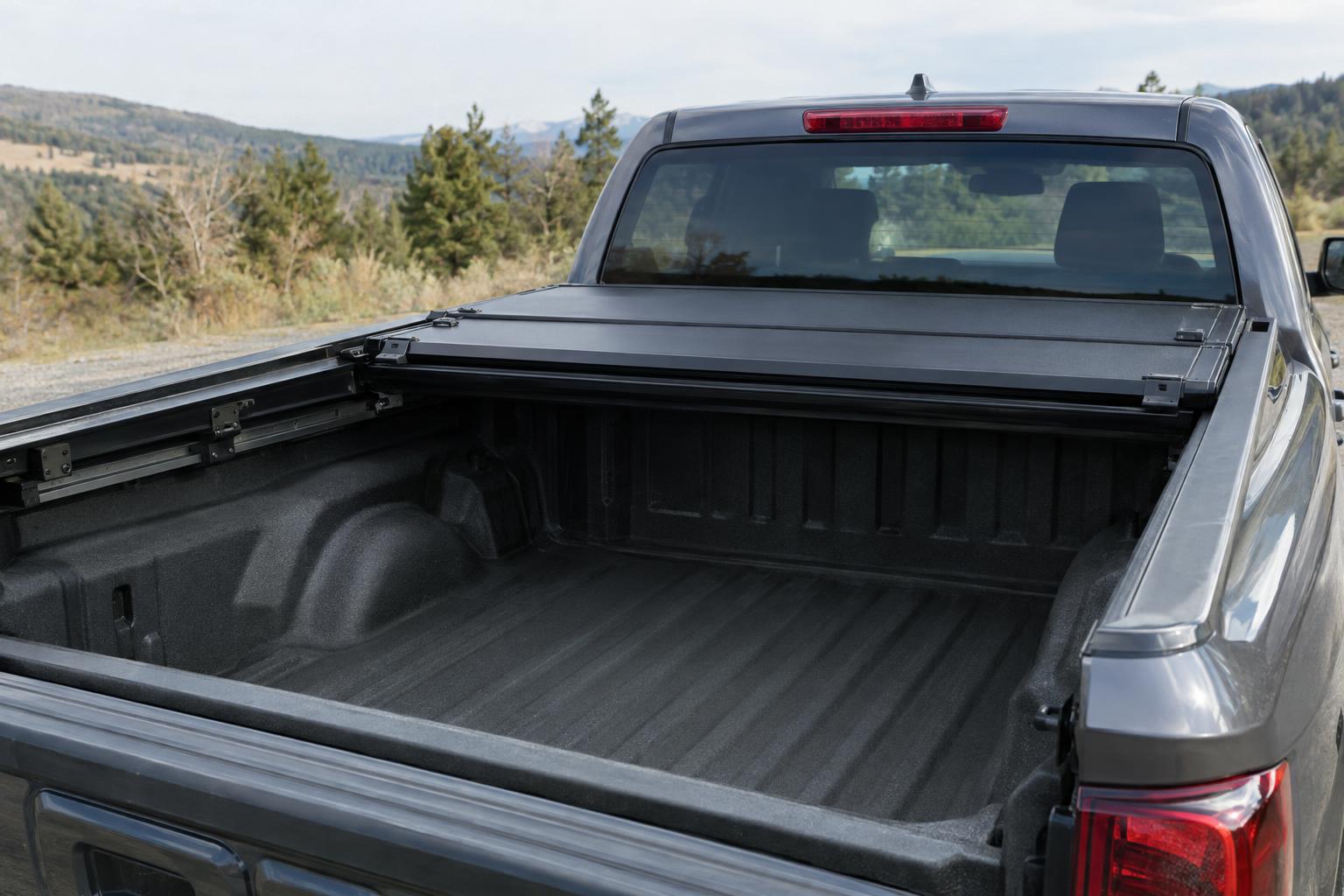
Hard folding covers use rigid sections that fold toward the cab. Many allow part of the bed to remain covered while another section opens. They can feel substantial and may resist casual intrusion better than a flexible cover, but the exact latch design and tailgate relationship matter. When folded, the panels may cover part of the rear window or occupy space at the front of the bed.
Before choosing one, practice the opening sequence and ask how the folded panels are secured for driving. Check whether the cover can be removed without special tools when full bed access is needed. Panel joints and perimeter seals also deserve attention; water management depends on the complete installation, not the material of the top surface alone.
Retractable covers create adjustable openings
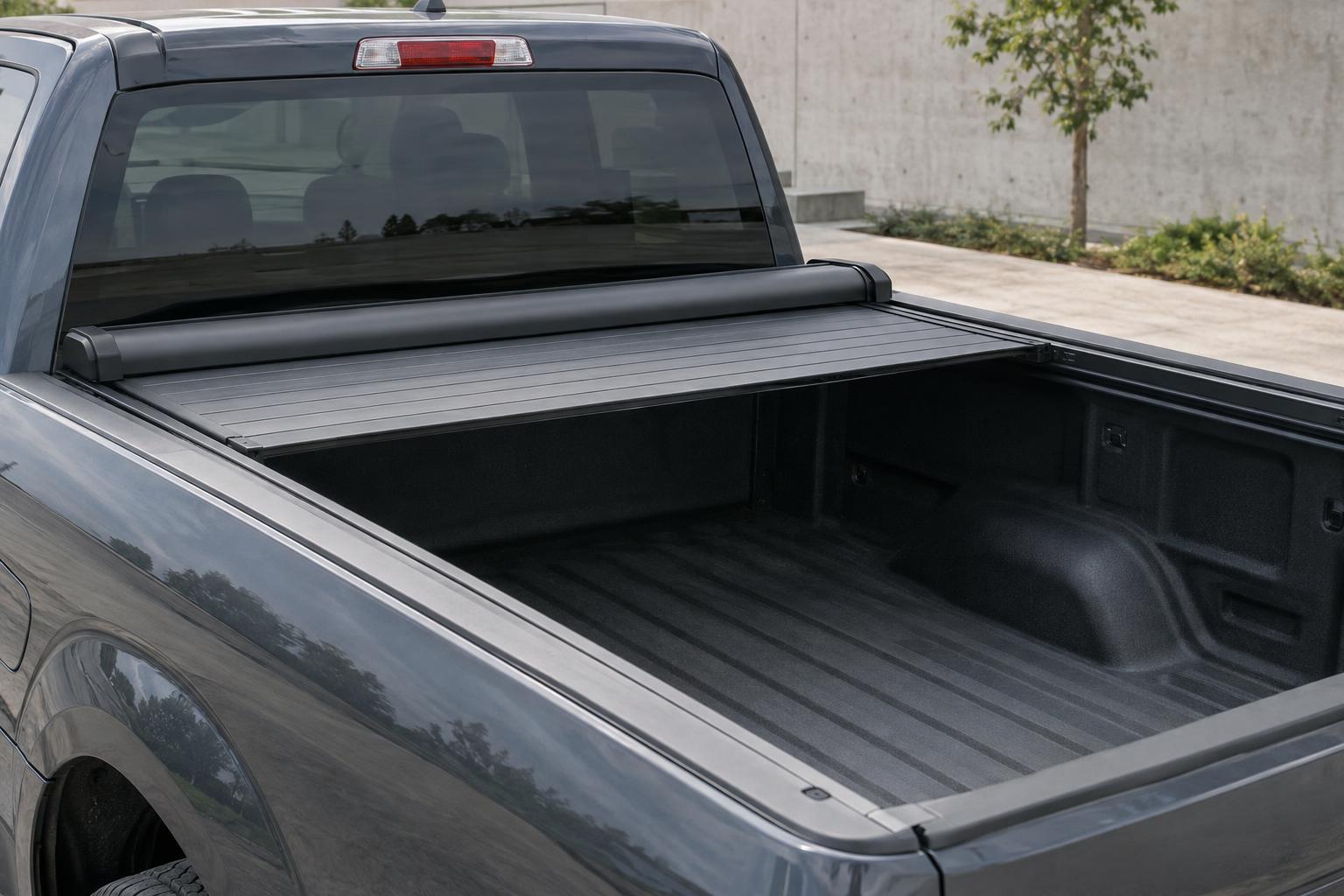
A retractable cover slides along rails and stores in a canister near the cab. It can be useful when the owner wants to stop the cover at different positions or open it without folding panels upward. The canister, however, takes up bed space and may affect how a toolbox or other accessory fits. Rails need to remain clean and aligned for smooth operation.
Manual and powered versions have different service needs. Ask what happens if the mechanism binds, how drainage is routed, and whether the canister can be accessed for cleaning. A sleek appearance does not eliminate maintenance. The installation should preserve the truck’s intended bed drainage and should not leave wiring or moving parts vulnerable to cargo.
One-piece hinged covers prioritize a solid top
A one-piece hinged cover lifts as a single panel, usually from the rear. Its uninterrupted surface can look clean and can create a strong barrier when paired with the truck’s locking setup. It works well for cargo that stays below the cover, but a tall load usually requires removing or leaving the panel open only as the manufacturer permits.
Removal may take more than one person because the panel is large even when it is not extremely heavy. Ask how it is supported, where it can be stored without damage, and how the hinges and lift supports are serviced. This style makes the most sense when the owner values a solid surface and rarely needs an unobstructed bed.
Compare security without assuming too much
A bed cover can conceal items and add a barrier, but security depends on the material, latches, rails, tailgate lock, installation, and the way cargo is stored. A closed hard cover over a locked tailgate may deter casual access better than an exposed load. It still should not be described as theft-proof. Valuable tools and electronics are safer when removed from the vehicle or stored in a purpose-built secured system.
Look underneath a display cover and ask how the latches engage. Confirm whether the cover can be opened while the tailgate is locked. Check whether emergency or service releases are accessible from outside. Independent testing and comparisons, such as this Car and Driver tonneau-cover guide, can help build a question list, but fit and operation still need to be verified on the specific truck.
Weather resistance depends on the whole system
Rain performance is not determined by the top material alone. Water can enter around the tailgate, stake pockets, rails, hinges, and drain tubes. A properly installed cover should direct water according to its design, but owners should expect the truck bed to remain a vehicle cargo area rather than a climate-controlled trunk. Sensitive items still need sealed containers.
Ask the installer to explain drainage and show where to inspect seals. Keep channels clear of leaves and grit. After installation, test with ordinary rain or a gentle hose rather than forcing high-pressure water under the edges. If a leak appears, note its location before changing the rail position or adding unrelated sealant.
Check compatibility with other truck accessories
Bed rails are valuable real estate. Toolboxes, ladder racks, sport racks, bed caps, liners, tie-downs, and cargo-management systems may compete for the same mounting points. A cover that fits the bare truck may not work with an accessory already installed. Bring a list and photographs of everything attached to the bed before ordering.
Confirm the truck’s exact year, make, model, and any special rail or tailgate configuration, and measure its bed length. Do not assume two trucks that look similar use the same kit. Ask whether installation requires drilling, whether factory tie-downs remain accessible, and whether a later rack can be added. Planning the system together is less expensive than discovering that two new accessories cannot share the rails.
Use the cover without neglecting cargo securement
A closed cover is not a substitute for securing cargo. Items can slide, strike the cover from below, damage the bed, or shift the truck’s balance. Use suitable tie-down points and restraints for the load, and keep sharp or heavy objects from contacting the cover mechanism. Follow the truck and accessory manufacturers’ limits for loading and operation.
Before driving, confirm that the cover is fully latched or secured in its approved open position. Do not let a folded or rolled assembly move freely. Recheck the load after a short distance when carrying something unfamiliar. A good cover should make the truck easier to use, but safe loading practices remain the driver’s responsibility.
Choose by a normal week, not an unusual day
Imagine the truck through an ordinary week: work gear on Monday, groceries midweek, a wet beach bag on Saturday, and an occasional tall purchase. Decide which tasks happen often enough to shape the purchase. Then compare how each cover opens, how much bed space it consumes, how it works with the tailgate, and what maintenance the owner is willing to perform.
SunGuard Window Tinting offers truck accessories for drivers in Punta Gorda and Port Charlotte. Review the shop’s truck accessories and our guide to a quality truck bed cover for Florida weather. When you are ready to compare fit and everyday operation, contact SunGuard with the truck’s year, make, model, bed length, existing accessories, and the loads you carry most.
Frequently asked questions about truck bed cover types
Which truck bed cover gives the most bed access?
That depends on the design and how it stores. Rolling and removable models can open broadly, while folding and retractable systems keep panels or a canister near the cab. Check the exact model on the truck.
Are hard truck bed covers waterproof?
Do not assume any pickup bed becomes fully waterproof. Seals, rails, drain routing, the tailgate, and installation all affect water entry. Put sensitive items in sealed containers.
Can a bed cover work with a toolbox or rack?
Some combinations are designed to work together and others compete for the same rail space. Verify the exact truck, toolbox, rack, and cover before ordering.
Does a cover secure cargo by itself?
No. A cover can conceal and shield a load, but cargo still needs suitable restraints and tie-down points. Secure the cover itself in its approved closed or open position before driving.