What to Expect During Your First Window Tint Appointment
Scheduling your first window tint appointment can feel a little uncertain, especially if you have never had aftermarket film applied to your vehicle. What does the process involve? How long will it take? Will the shop handle everything, or do you need to prepare your car beforehand? These are all fair questions, and at SunGuard Window Tinting in Punta Gorda, FL, we have answered them tens of thousands of times over the past four decades. Owner Bill Jenks founded SunGuard in 1980, and our team has tinted more than 100,000 vehicles since then. We know exactly how to make your first visit smooth, fast, and stress-free.
Whether you drive a compact sedan, a lifted truck, or a luxury SUV, this guide walks you through every stage of a professional window tint installation so you can arrive confident and leave with a beautifully tinted ride.
How to Prepare Your Vehicle Before the Appointment
A little preparation on your end goes a long way toward ensuring the best possible result. Here is what we recommend before you bring your car in:
- Clean the exterior glass. While our technicians will thoroughly clean the inside of every window, arriving with reasonably clean exterior glass helps us spot any chips or cracks that could affect adhesion.
- Remove personal items from the rear deck and doors. Suction-cup phone mounts, dash cams, and hanging air fresheners should be taken down so we have unobstructed access to every window.
- Clear any aftermarket stickers or decals on the glass. Residual adhesive from old stickers can interfere with film bonding. Let us know if you have any so we can address them during prep.
- Note any existing damage. Small chips, scratches, or delamination on factory glass should be pointed out during check-in. We document pre-existing conditions so there are no surprises afterward.
- Plan for the wait or arrange a ride. Most standard automotive tint jobs take between 90 minutes and three hours depending on the number of windows and the complexity of the vehicle. We have a comfortable waiting area, but some customers prefer to drop off and pick up later.
If you are unsure which shade or film type to choose, our staff will walk you through the options during check-in. We carry a range of ceramic, carbon, and dyed films at different price points, all detailed on our automotive window tinting page.
What Happens During the Installation Process

Once your vehicle is checked in, our certified installers follow a meticulous multi-step process:
Step 1: Interior Glass Cleaning
Each window is cleaned with a specialized solution that removes oils, dust, and microscopic debris. Even a single speck of dirt trapped under the film can cause a visible bubble, so this step is critical. We use lint-free cloths and automotive-grade glass cleaner, never household products that leave residue.
Step 2: Film Cutting and Shaping
Using precision cutting software and templates specific to your vehicle’s make, model, and year, we cut each piece of film to exact specifications. This computer-aided approach eliminates the guesswork of hand-cutting on the glass, reducing the risk of blade marks and ensuring seamless edge-to-edge coverage.
Step 3: Application and Squeegee Work
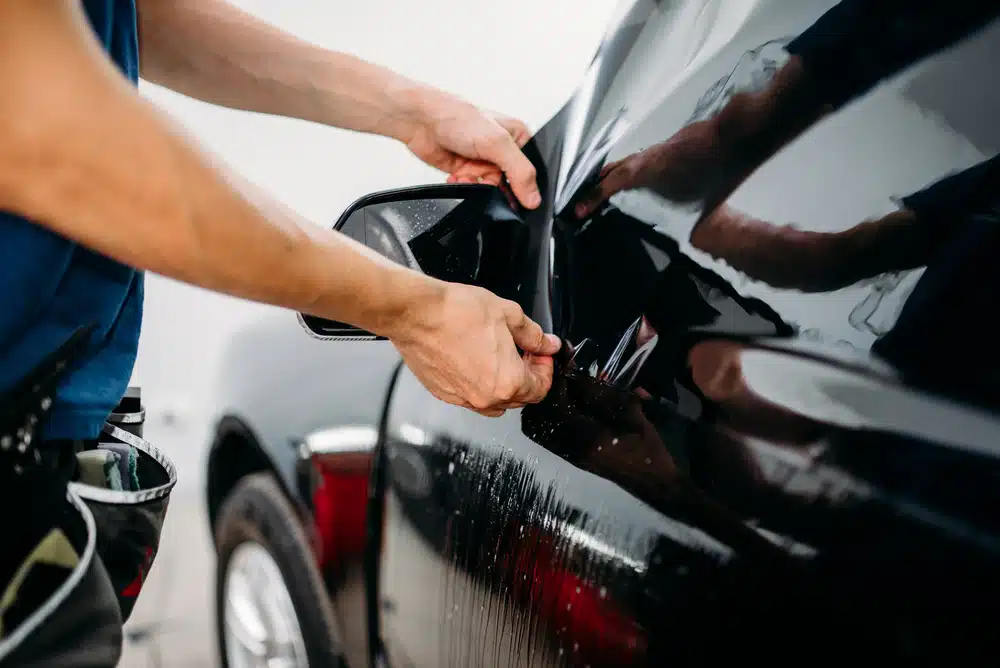
The film is applied to the interior surface of each window using a slip solution that allows the installer to position it perfectly. A series of squeegees then push out moisture and air, bonding the film tightly to the glass. Curved rear windows on sedans and coupes require heat shrinking to conform the flat film to the compound curvature, a skill that separates experienced shops from amateurs.
Step 4: Final Inspection
After every window is filmed, a senior technician inspects the work under bright light, checking for bubbles, creases, contamination, and edge gaps. Any imperfection is addressed on the spot before your vehicle leaves the bay.
At SunGuard, Bill Jenks personally oversees quality standards that have been refined across more than 45 years in the business. That level of institutional knowledge is something you simply will not find at a pop-up tint shop.
Understanding Florida Window Tint Laws
One of the most common concerns for first-time customers is staying legal. Florida has specific statutes governing how dark your tint can be. According to Florida Statute 316.2953, the rules differ between sedans and SUVs or trucks:
- Sedans: The front side windows must allow at least 28% of visible light through (28% VLT). Rear side windows and the rear windshield can be any darkness.
- SUVs and trucks: The front side windows must also meet the 28% VLT minimum, but rear side and rear windows have no restriction.
- Windshield: Non-reflective tint is allowed along the top of the windshield above the manufacturer’s AS-1 line, typically about five to six inches down.
- Medical exemptions: Drivers with qualifying medical conditions can apply for a darker tint exemption through their physician and the Florida DMV.
We walk every customer through these regulations during the consultation so you can choose a shade that matches your aesthetic preferences without risking a citation. For a deeper dive into the specifics, visit our detailed guide on Florida window tint laws.
Cure Time, Aftercare, and What to Avoid

After your tint is installed, there is a curing period during which the adhesive fully bonds to the glass and any remaining moisture evaporates. Here is what you need to know:
- Cure time: In Southwest Florida’s warm, humid climate, most films cure within three to five days. During cooler winter months, it can take up to two weeks. You may notice small water bubbles or a slightly hazy appearance during this period. This is completely normal and will disappear as the film dries.
- Do not roll the windows down for at least 48 to 72 hours. Moving the glass before the adhesive sets can shift the film or peel it away from the edges.
- Avoid cleaning the inside of the tinted windows for one week. When you do clean them, use a soft microfiber cloth and an ammonia-free glass cleaner. Ammonia-based products like Windex can degrade the film over time.
- Do not use abrasive pads or razor blades on tinted surfaces. If you need to remove a sticker, let our team handle it.
- Seat belt marks and light scratches on the film surface can often be buffed out. Bring your vehicle in and we will take a look at no charge.
Following these simple aftercare instructions ensures your tint looks flawless for years. Most premium ceramic films come with a lifetime warranty against bubbling, peeling, and discoloration, giving you long-term peace of mind.
Why First-Timers Trust SunGuard Window Tinting
Choosing a tint shop for your first window tint appointment is a big decision, and the quality of the installation makes all the difference. A poorly applied tint can bubble, peel, or turn purple within months, leaving you frustrated and out of pocket. At SunGuard, our track record speaks for itself: over 100,000 vehicles tinted since 1980, thousands of five-star reviews, and a reputation built on craftsmanship and honesty.
We serve drivers across Southwest Florida, including Punta Gorda, Port Charlotte, Cape Coral, North Port, Englewood, Fort Myers, Sarasota, Arcadia, and Venice. No matter where you are in the region, you are welcome at our shop on Sandhill Boulevard.
Ready to book your first window tint appointment? Call SunGuard Window Tinting in Punta Gorda, FL at (941) 625-9666 today. Our friendly staff will answer your questions, help you choose the right film, and get you on the schedule at a time that works for you.
Frequently Asked Questions
How long does a window tint appointment take?
Most vehicles take between 90 minutes and three hours, depending on the number of windows being tinted and the complexity of the glass curvature. Larger vehicles like SUVs and vans may take slightly longer. We recommend planning for a half-day visit or arranging a pickup time with our front desk.
Can I wash my car right after getting tint installed?
Yes, you can wash the exterior of your car immediately. However, avoid cleaning the interior side of the tinted windows for at least seven days. When you do clean them, use an ammonia-free glass cleaner and a soft microfiber cloth to protect the film.
What happens if my tint has bubbles after the installation?
Small water bubbles are completely normal during the first few days after installation. They are caused by trapped moisture that evaporates through the film as it cures. In Florida’s warm climate, these typically disappear within three to five days. If bubbles persist beyond two weeks, bring your vehicle back and we will inspect the film at no charge.
Is it illegal to tint the windshield in Florida?
Full windshield tint is not legal in Florida. However, you are allowed to apply a non-reflective tint strip along the top of the windshield above the manufacturer’s AS-1 line. This strip typically extends about five to six inches from the top and is effective at reducing sun glare.
Do I need to make an appointment, or do you accept walk-ins?
We accept both appointments and walk-ins, but scheduling an appointment ensures we have a bay and the right film ready for your vehicle. During peak season in Southwest Florida, appointments fill up quickly, so calling ahead at (941) 625-9666 is always a good idea.
Still have questions about your first window tint appointment? Contact SunGuard Window Tinting in Punta Gorda, FL and our team will walk you through everything before your visit.